
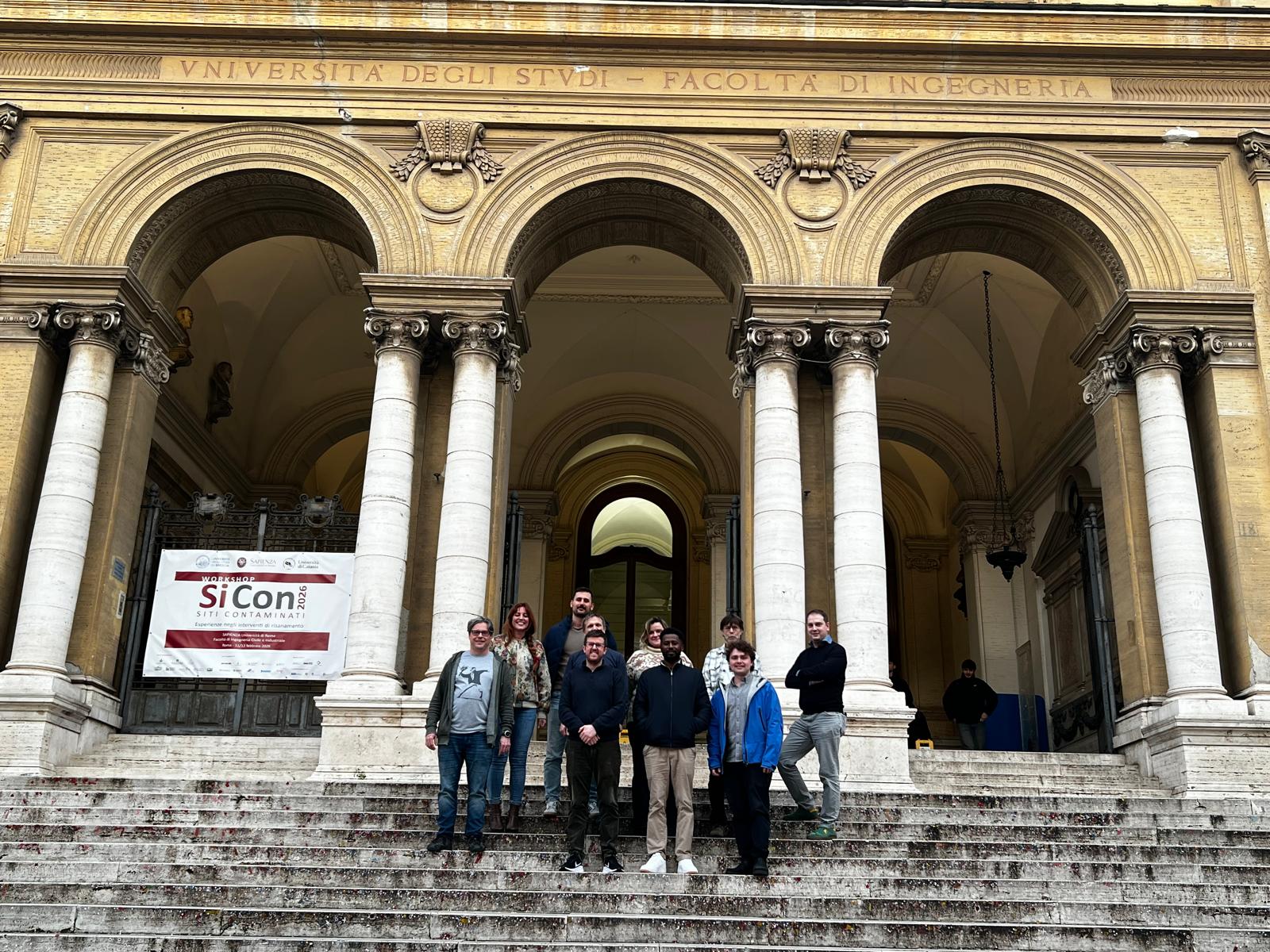
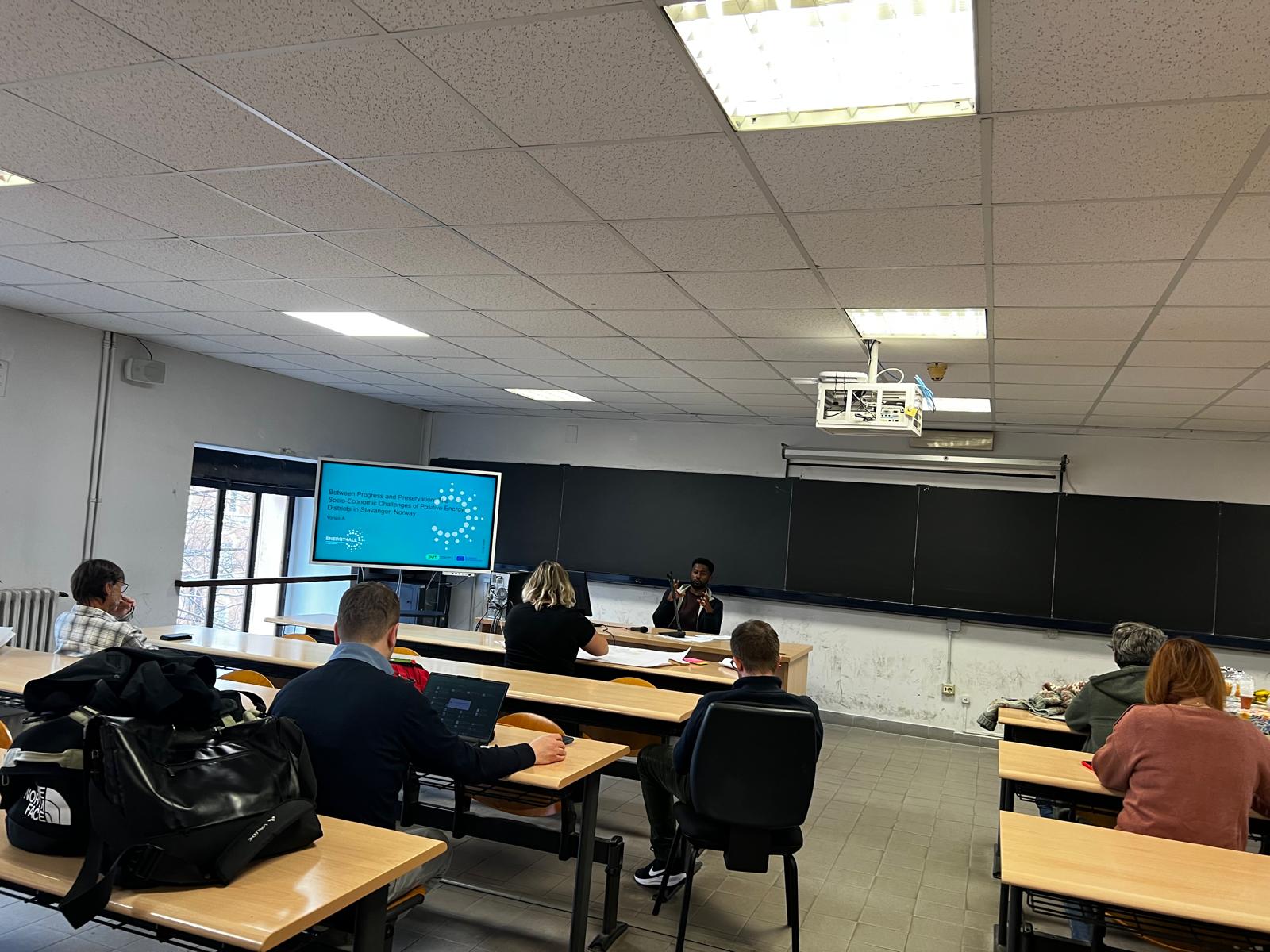

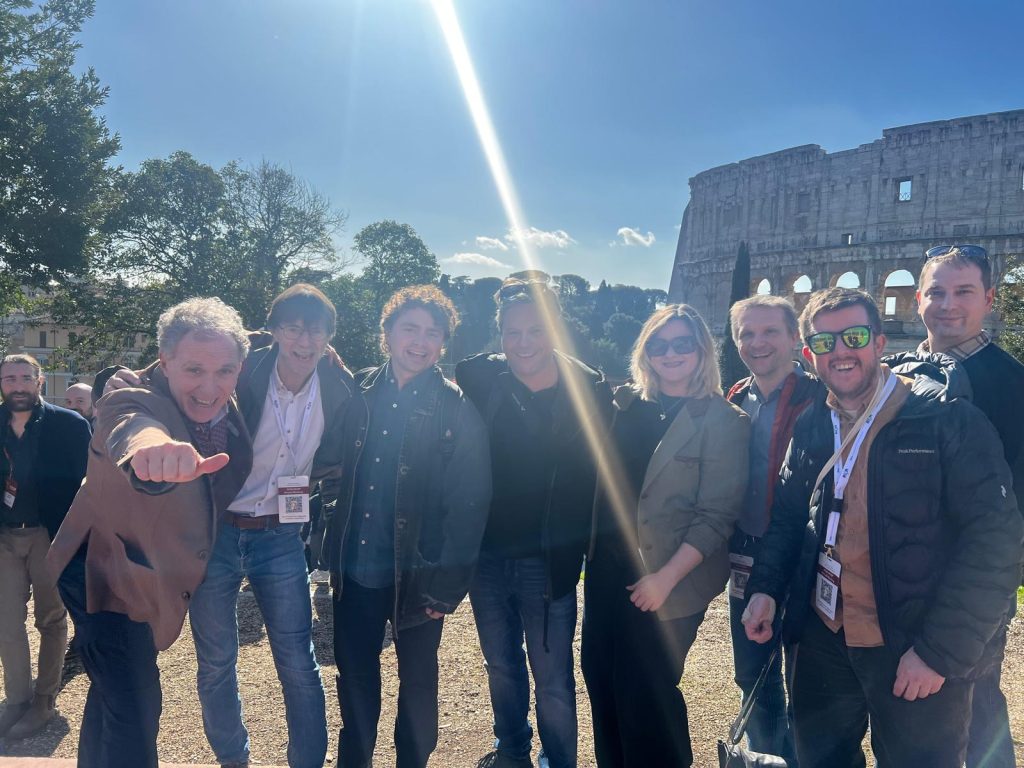
After more than a year since our last in-person meeting in Budapest, the Energy4All consortium reconvened in Rome on Thursday, February 12th, 2026. After more than a year since our last in-person meeting in Budapest, the Energy4All consortium reconvened in Rome on Thursday, February 12th, 2026. Representatives from Technical Solidarity (IT), BOKU (AT), Eutropian (IT and AT), Solidarity Eonomy Center and ABUD (HU), and University of Stavanger and City of Stavanger (NO) gathered to reflect on the project’s achievements and challenges, as well as to discuss the impact we aim to generate by the end of this year. gathered to reflect on the project’s achievements and challenges, as well as to discuss the impact we aim to generate by the end of this year.
Hosted by Eutropian, the consortium meeting took place at the Faculty of Engineering of Sapienza University of Rome and was warmly welcomed by Professor Andrea Micangeli.
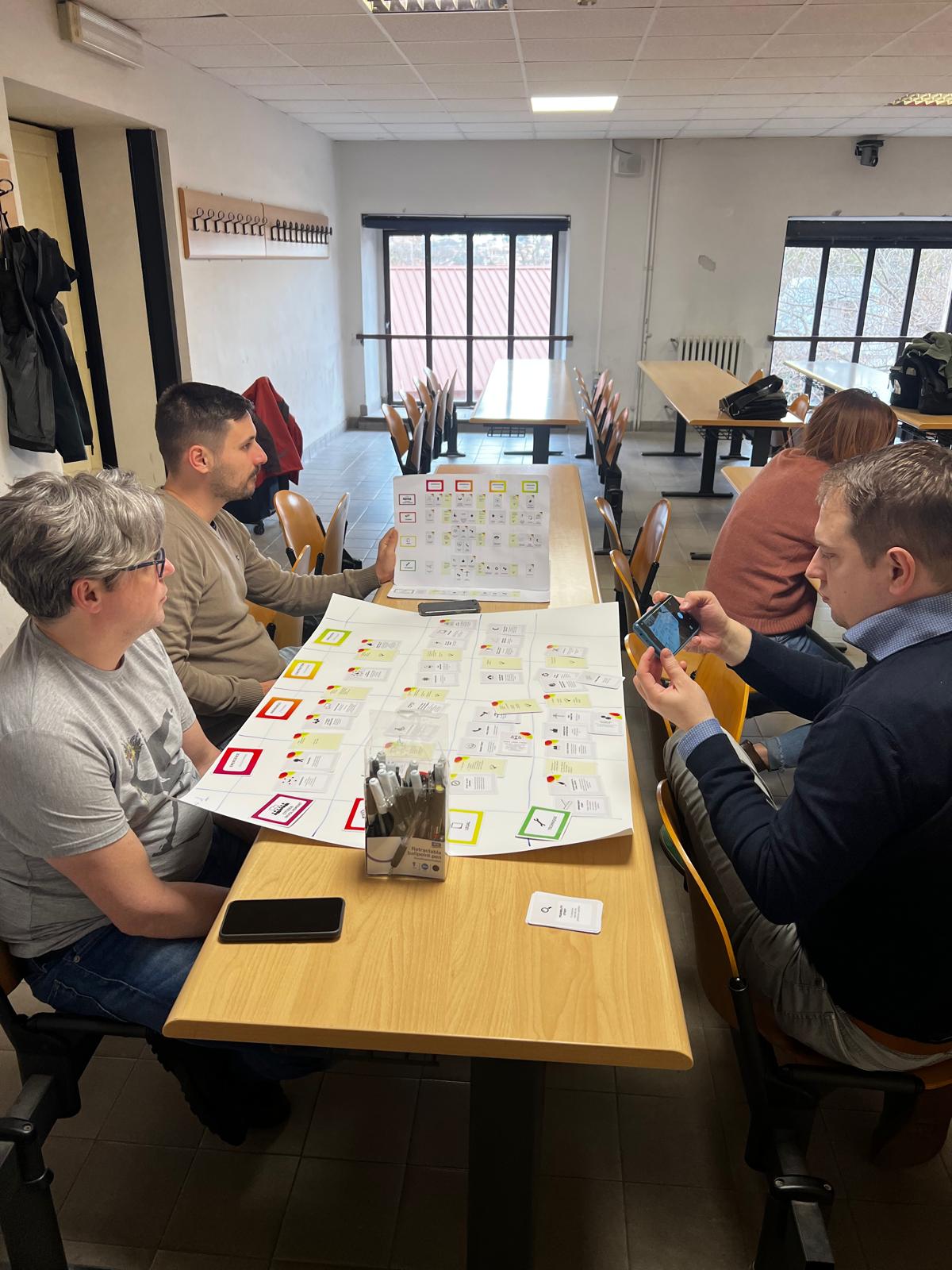
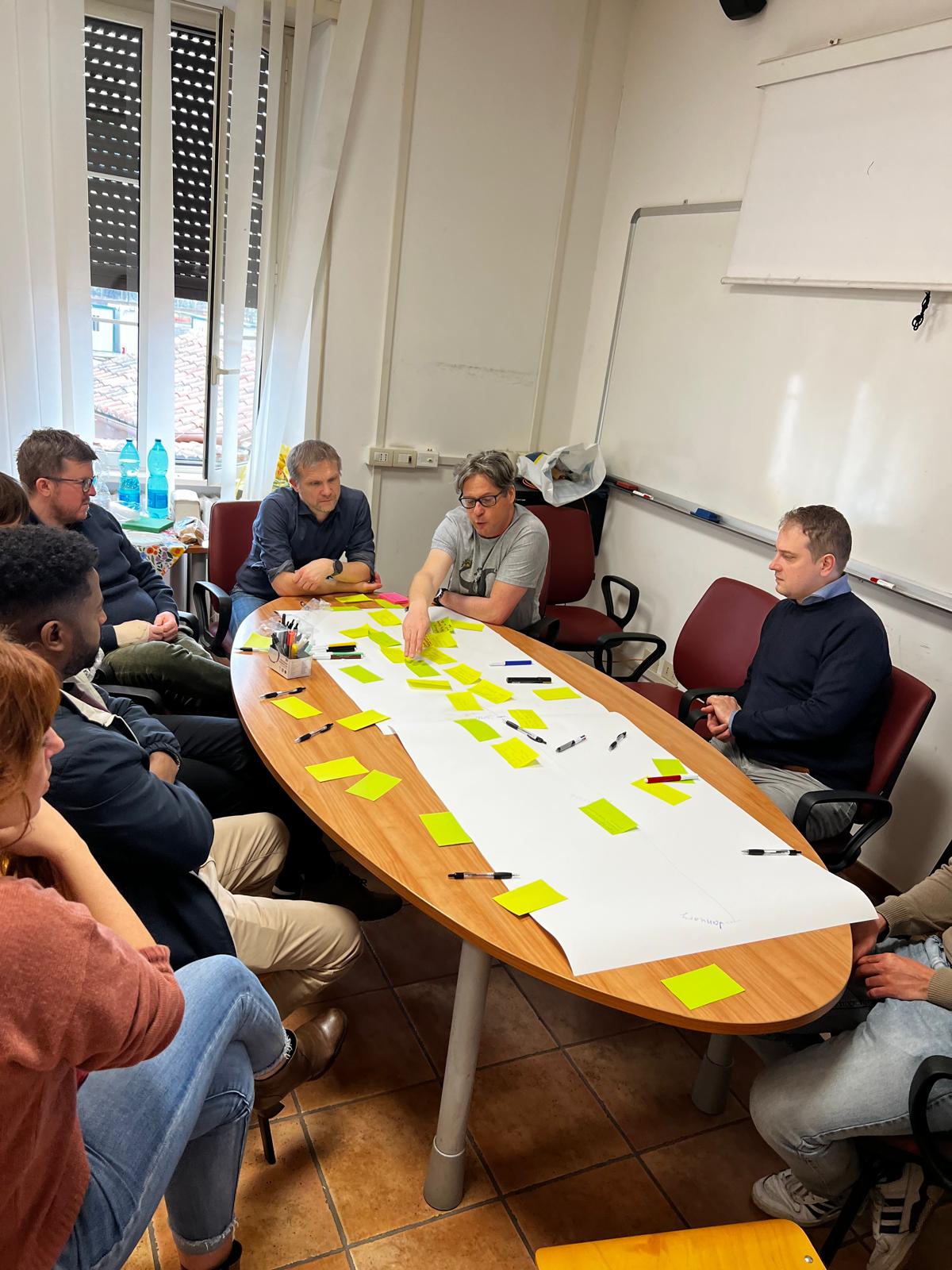
The meeting was designed around participatory methodologies, including co-creation and gamification exercises, fostering an interactive and collaborative environment that encouraged collective reflection and forward-looking planning.
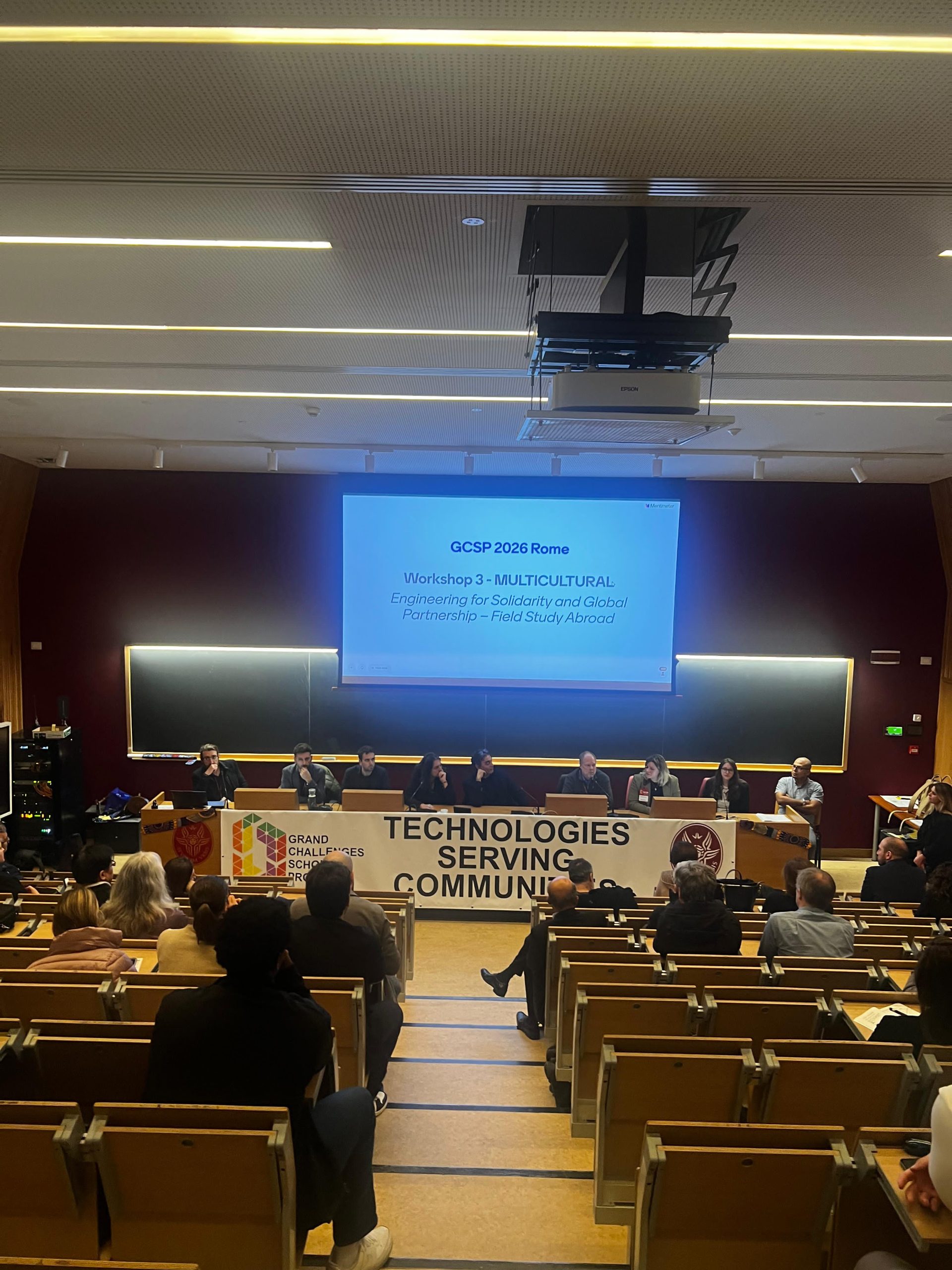
In the following days, members of the consortium also had the opportunity to attend and participate in the Grand Challenge Scholars Program Annual Meeting, which brought together students, faculty, and professionals in Rome. The event provided a dynamic platform for knowledge exchange, networking, and interdisciplinary dialogue, exploring how the intersection of community engagement and technological innovation can generate impactful solutions to global challenges.
Sapienza University, Faculty of Engineering
We were truly grateful for the opportunity to hold our meeting at the Faculty of Engineering of Sapienza University of Rome. Located near the Colosseum and San Pietro in Vincoli, the setting offered a unique blend of historical significance and contemporary innovation. Surrounded by Rome’s rich cultural heritage and the vibrant academic environment of Sapienza, we felt both inspired and energized by the dynamic interplay between tradition and forward-looking social and technological initiatives.
Future Impacts and Timelines
With two years under our belt and as we quickly move into the last year of the project, an impactful workshops was a timeline co-creation. We asked ourselves and answered foundational questions such as which are our desired outcomes and impacts that we want to achieve? This workshop allowed us to understand each pilots and partners’ aims as well as the cross-pilot similarities in tools or timelines in needed to achieve these goals.
Gamification and the Frizzle game
Continuing on the thread of timelines, we also played a game called Frizzle. Frizzle was developed by Energie Partagée, a French organisation working to shepherd energy communities throughout France through leveraging their expertise and employing gamification to educate and for community engagement. When playing Frizzle, players create two timelines with distinct phases, such as emergence, awareness, construction, and operation, as well as operations such as funding, legal, and technical. Players are asked to fill in the puzzle using step cards and milestone cards necessary for creating an energy community as well as using additional cards to create a citizen renewable energy community. This process allowed partners to reflect on gamification, how the game cards and timeline differ to their national context, and the complex matrix needed to establish equitable renewable citizen energy communities.
Systems mapping and Theory of Change
One of the highlights of the meeting was a session on systems mapping, led by Abel Magyari from ABUD. By visually mapping each pilot, the consortium explored recurring dynamics and cross-cutting patterns that shape the development of our Energy Communities and Positive Energy Districts. This collective reflection helped clarify how different variables interact, revealing the interconnected nature of social, technical, and governance elements across cases.
The discussion then turned to the Theory of Change framework, encouraging us to articulate the long-term impact we aim to achieve and to work backward from that vision. By defining objectives that are clear and measurable, the consortium strengthened its strategic alignment for the final year of the project. This exercise reinforced the importance of intentional planning while maintaining the flexibility needed to respond to local contexts and evolving challenges.
The GCSP Conference
In the days following our consortium meeting, the Energy4All team participated in the Grand Challenge Scholars Program (GCSP) Annual Meeting, an international gathering that brought together scholars, academics, and professionals from across the globe, including participants from the United States, Latin America, Africa, and various European countries. The event created a vibrant and interdisciplinary space for exchange, connecting research, education, and practice around global societal challenges.
Energy4All had the opportunity to present both the project and its poster, engaging with an audience strongly oriented toward technological and engineering-driven innovation. It was particularly valuable to observe how our project positioned itself within this context. While many initiatives focused primarily on technical solutions, Energy4All highlighted the social foundations of energy transition: energy as commons and by consequence the community governance, participation, and different frameworks related to these aspects. The exchanges confirmed that in many highly technical projects, the social dimension is often underdeveloped, yet it is precisely this element that determines long-term success and acceptance.
During the panel discussion, Energy4All coordinator Stefanija Hrle Aiello emphasized the central role of community and community engagement in energy projects. She underlined that the social dimension of energy transition begins long before any technical installation takes place. Building an energy community is not only about infrastructure but it is about education, trust-building, and empowering people to actively participate in shaping their local energy systems. Energy projects ultimately serve communities, and without their awareness, ownership, and trust, even the most advanced technical solutions risk falling short.
Learn more about the Energy4All project: https://energy4allproject.eu/
| Cookie | Duration | Description |
|---|---|---|
| cookielawinfo-checkbox-analytics | 11 months | This cookie is set by GDPR Cookie Consent plugin. The cookie is used to store the user consent for the cookies in the category "Analytics". |
| cookielawinfo-checkbox-functional | 11 months | The cookie is set by GDPR cookie consent to record the user consent for the cookies in the category "Functional". |
| cookielawinfo-checkbox-necessary | 11 months | This cookie is set by GDPR Cookie Consent plugin. The cookies is used to store the user consent for the cookies in the category "Necessary". |
| cookielawinfo-checkbox-others | 11 months | This cookie is set by GDPR Cookie Consent plugin. The cookie is used to store the user consent for the cookies in the category "Other. |
| cookielawinfo-checkbox-performance | 11 months | This cookie is set by GDPR Cookie Consent plugin. The cookie is used to store the user consent for the cookies in the category "Performance". |
| viewed_cookie_policy | 11 months | The cookie is set by the GDPR Cookie Consent plugin and is used to store whether or not user has consented to the use of cookies. It does not store any personal data. |