






Food systems are facing growing pressure — from rising food insecurity and geopolitical uncertainty to the need for more sustainable and resilient ways of producing, accessing and sharing food. ROOTED, a pioneering new Horizon Europe prject explores how Landed Community Kitchens (LCKs) can contribute to this transformation by connecting communities with local, sustainable and agroecological food producers.
LCKs are social and solidarity economy enterprises that address food insecurity and social inclusion while creating neighbourhood spaces where people can access, cook and share food together. Rooted in local networks of sustainable food production, they have the potential to transform not only how people access food, but also food cultures, behaviours and the wider food environment.
Through eight Living Labs and a network of 50+ kitchens across 20 cities and ten countries, ROOTED will explore how these emerging initiatives can become resilient parts of neighbourhood food systems, looking at the policy, governance, business models and urban infrastructures that can support them.
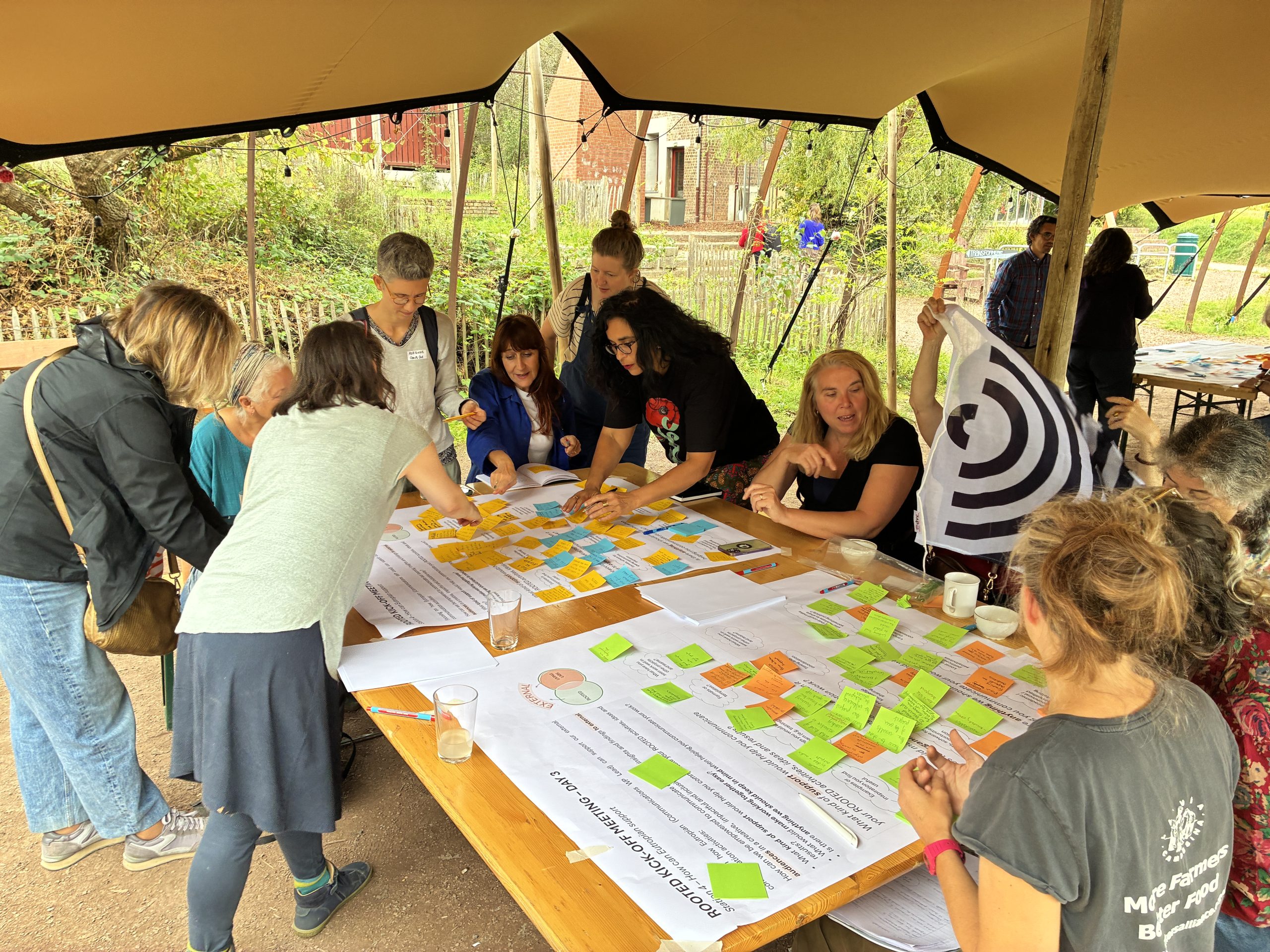
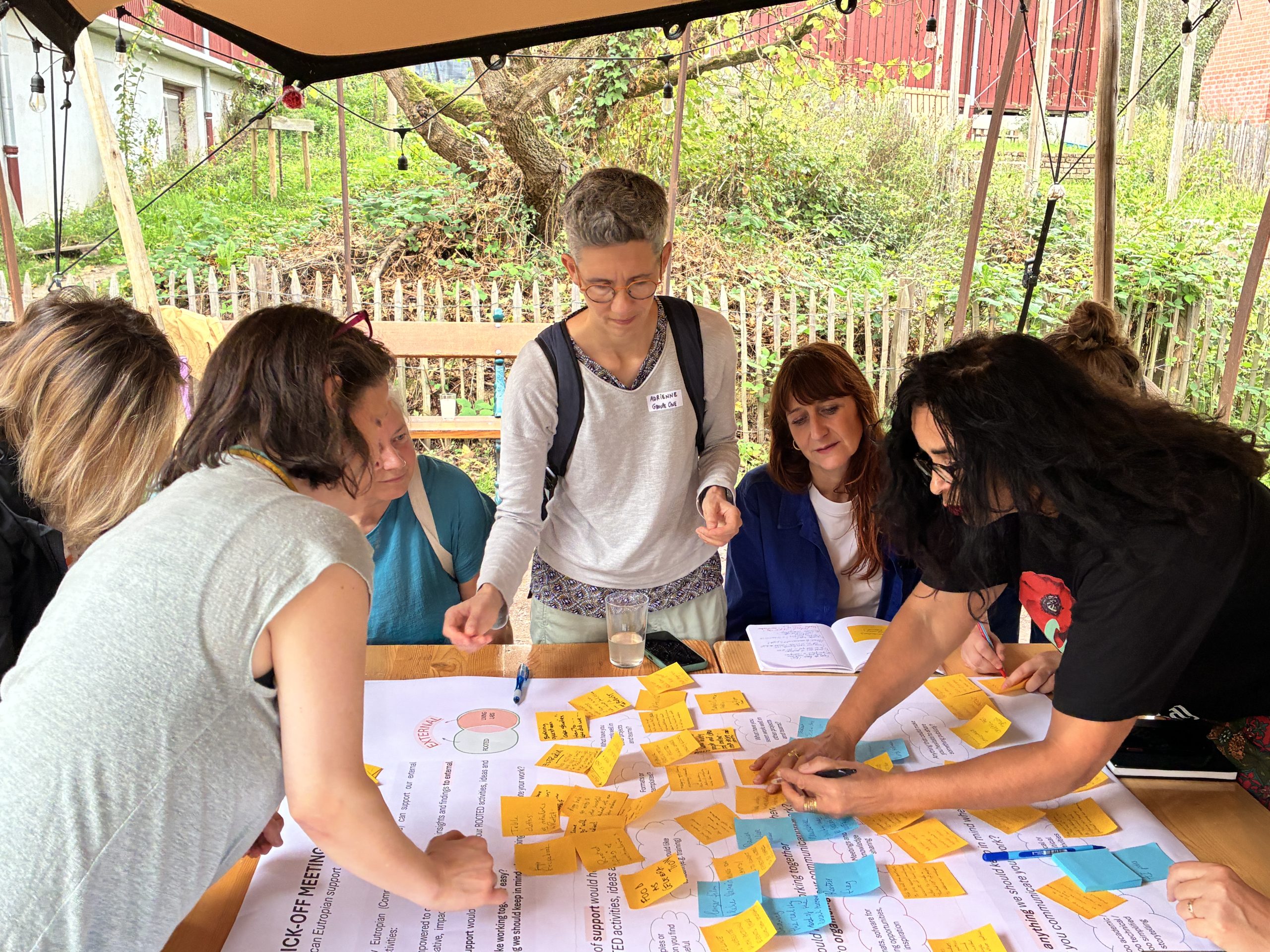
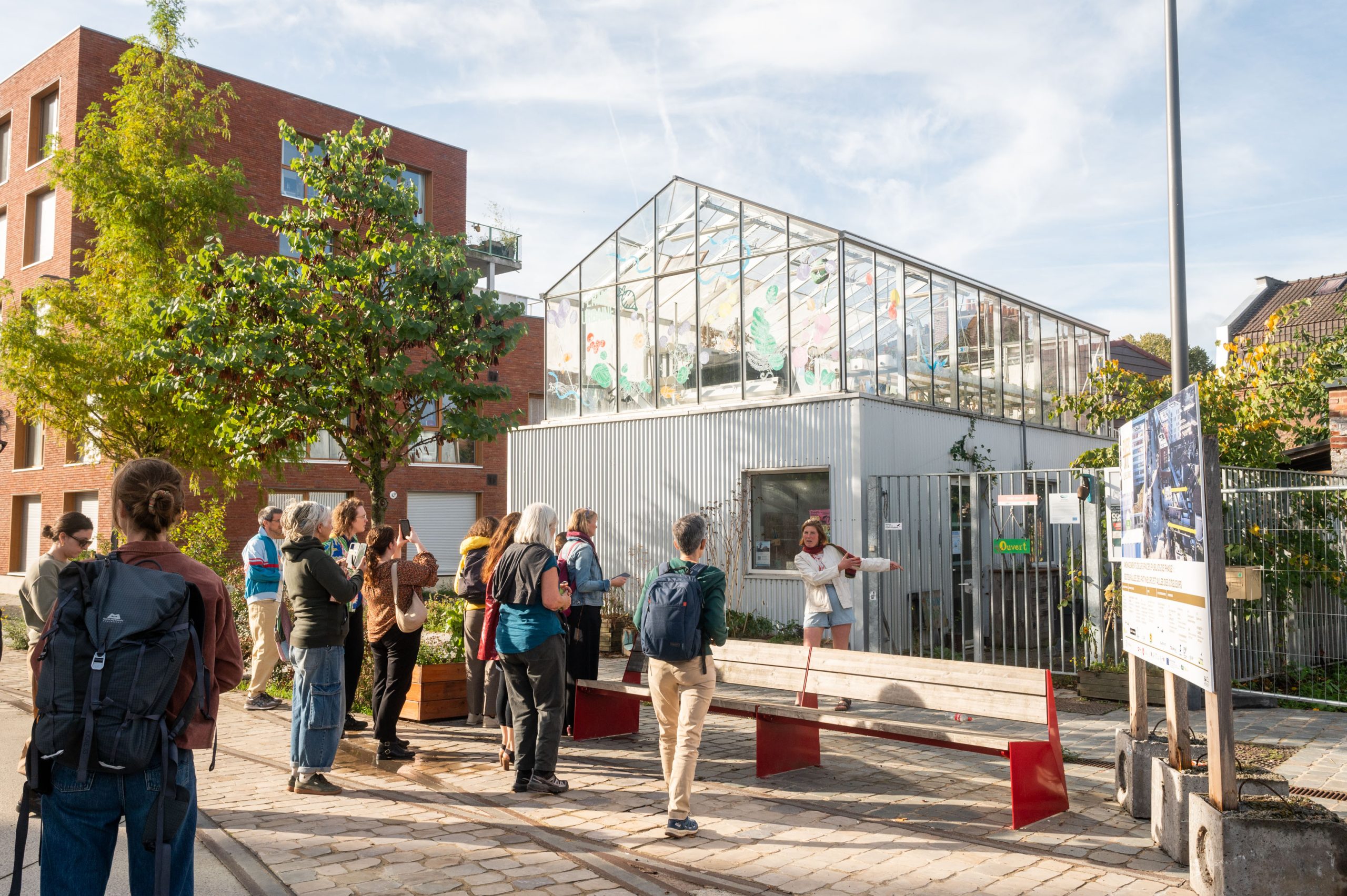
At the end of September, the ROOTED consortium came together in Brussels and Lille for its first in-person meeting, combining project discussions with visits to community kitchens, urban farms, food hubs and other local initiatives.
Our kick-off meeting took place at La Ferme du Chaudron, a historic farm on the shores of Lake Pede that is now being transformed into a House of Food Sovereignty for western Brussels.
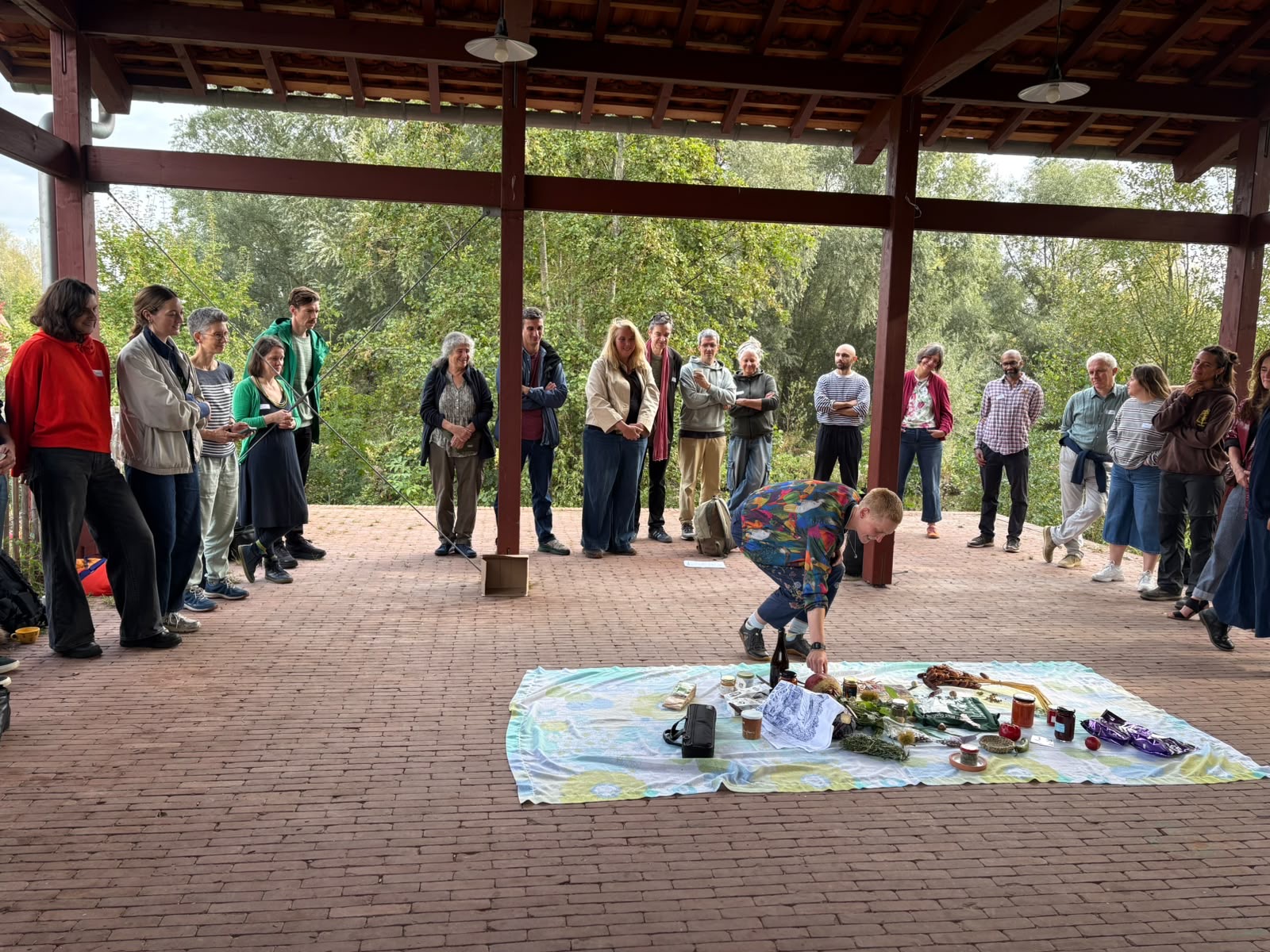
We began with a mistica, a collective ritual rooted in food sovereignty gatherings. Participants brought a personal or symbolic offering — from seeds and food to poems, images or objects from nature — creating a moment to set intentions and connect the political work ahead with emotions and personal experiences.
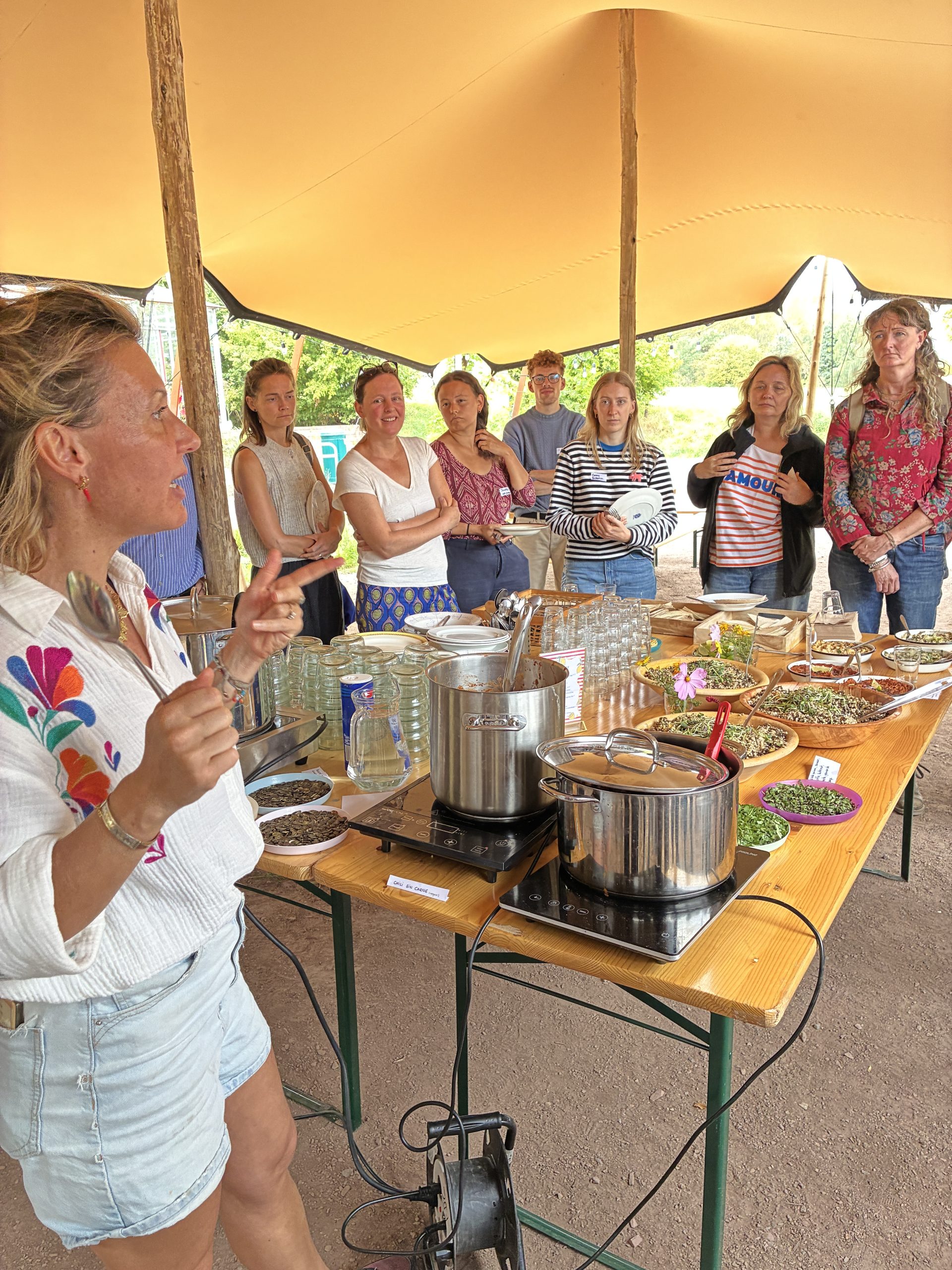
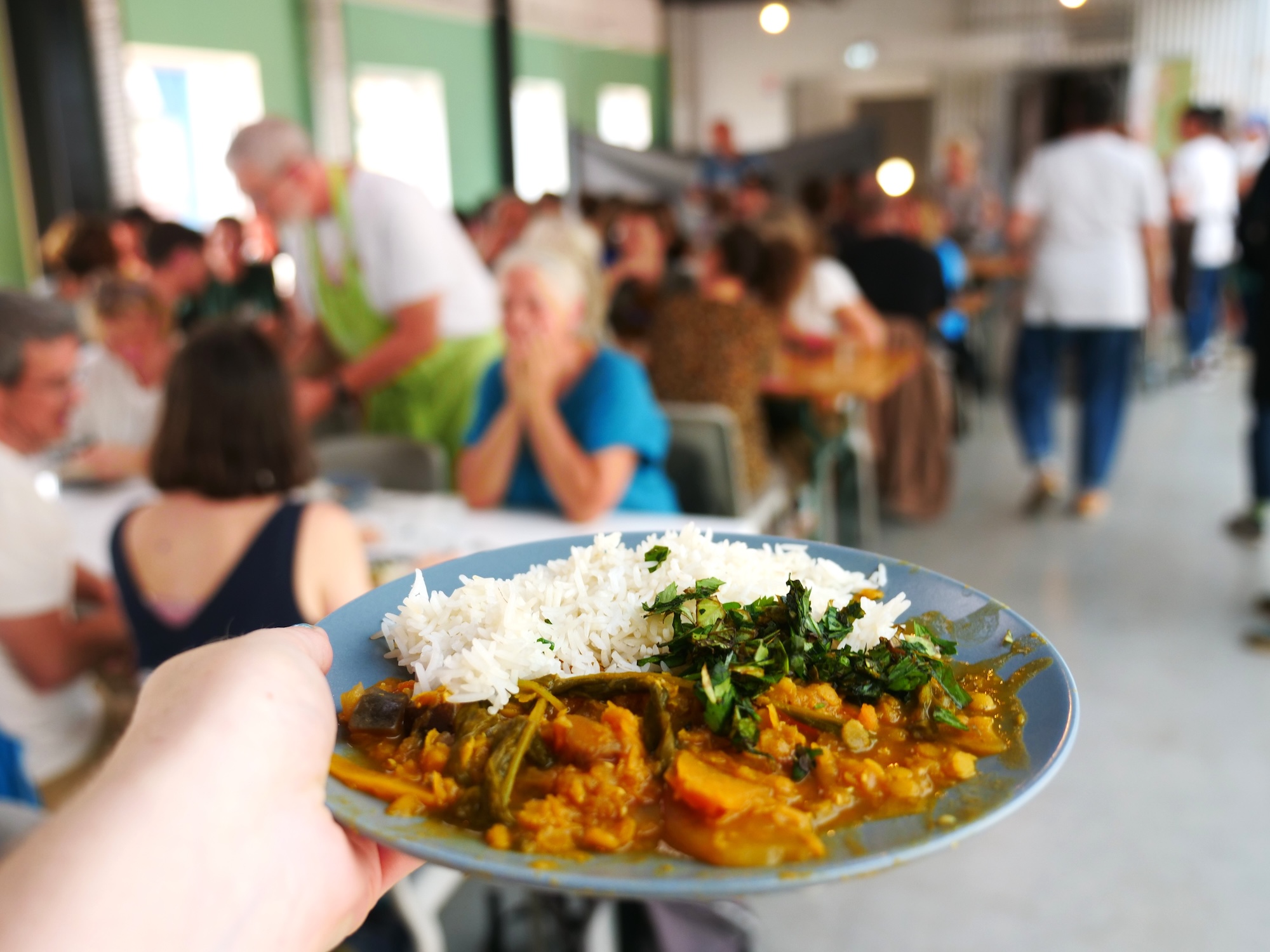
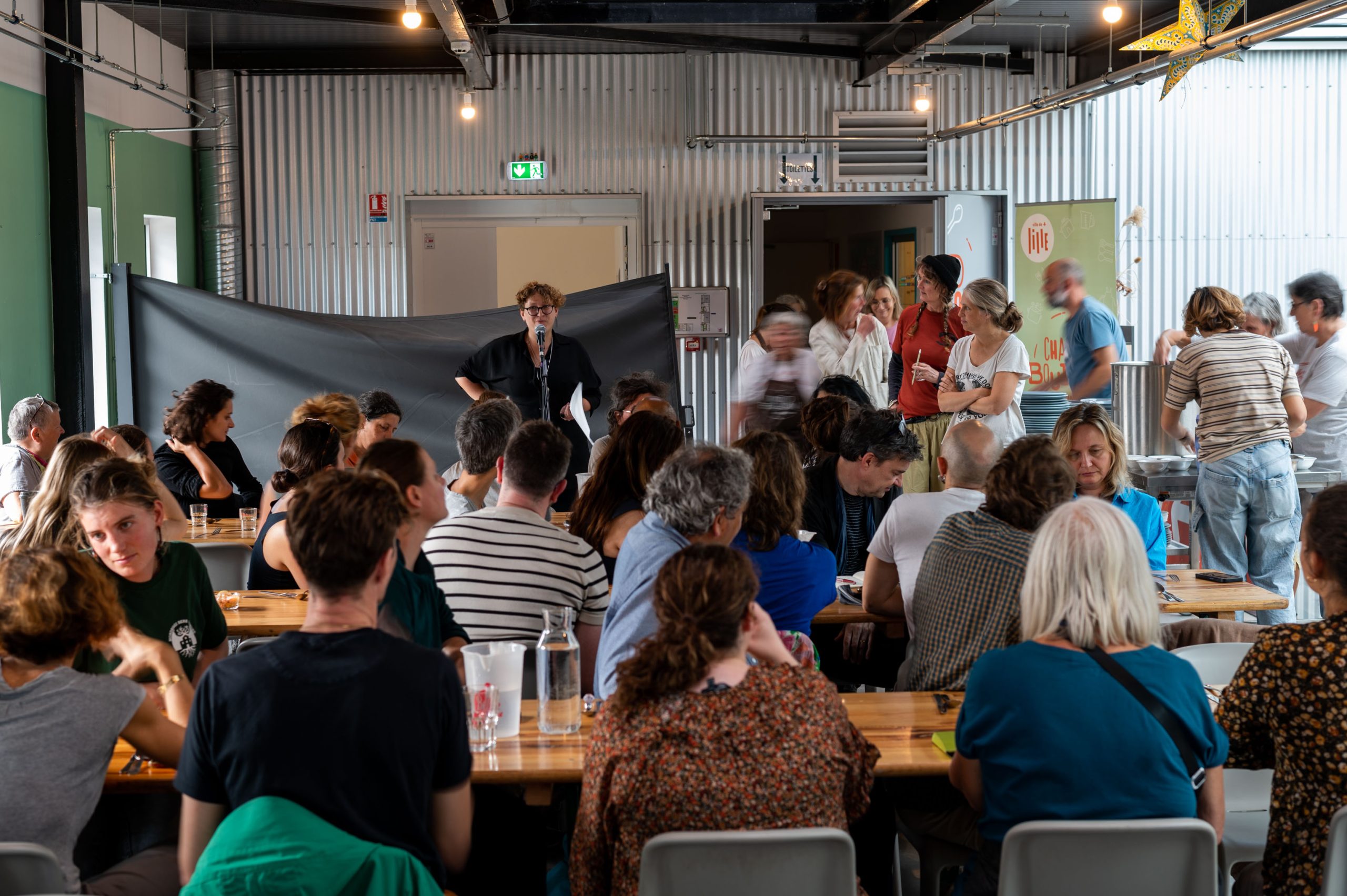
The first day moved between project discussions, getting to know each other and, naturally, food. We shared lunch prepared by La MarMeet, a community-led restaurant where volunteers and guests cook and eat together using rescued, seasonal produce. Later, we met online with the European Commission Project Officers and discussed the project’s framework and practical aspects, while also sharing our hopes and concerns for the journey ahead.
The day ended with a shared cooking session, bringing the consortium together around pizza, salads and dessert — an informal first taste of the convivial and participatory food culture that ROOTED is interested in exploring.
The following day, four groups explored different neighbourhoods of Brussels, meeting initiatives that approach food, community and social inclusion from different angles.
In Schaerbeek, we explored the ecosystem around Cuisines de Quartier, meeting partners including VRAC and La CLASS, which is experimenting with a Social Security for Food model. A meal prepared by Les Casseroles Solidaires and a visit to cooperative supermarket Bees Coop showed different ways of organising access to sustainable food.
In Etterbeek, KOM à la maison offered another perspective: a participatory restaurant where neighbours cook and share sustainable vegetarian meals on a pay-what-you-can basis. While one group joined the cooking, another worked alongside a local urban farmer connected to the neighbourhood’s social welfare system.
In Forest, the future Maison de l’Alimentation brought together a social grocery, sheltered workshop, vegetable gardens and initiatives supporting access to good food. At No JAVEL!, we saw how food redistribution can connect with other forms of neighbourhood support, while lunch at La Voisinerie brought us back to participatory community cooking.
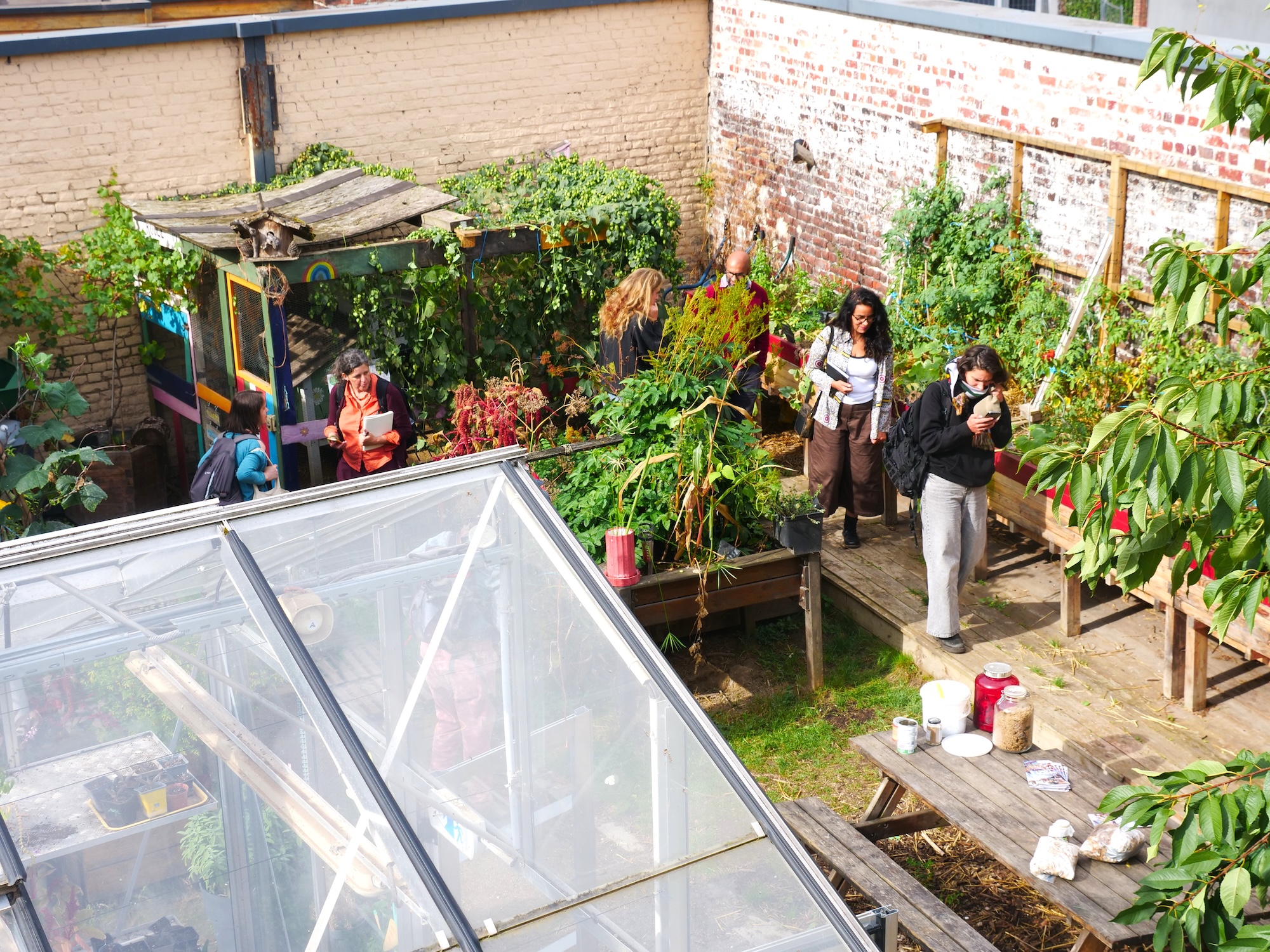
Finally in Saint-Gilles, we visited Partner Village, a hub for sustainable entrepreneurship and urban food initiatives, and La Pousse qui Pousse, a community urban farm and garden project focused on local food production and biodiversity. We shared lunch at Les Ateliers du Midi, a social and community centre hosting food, cultural and educational activities, and visited Friche asbl, a community-led space supporting local initiatives and neighbourhood life.
Across these visits, we encountered a diverse ecosystem of community kitchens, urban farms, social groceries, cooperative supermarkets, food redistribution initiatives and other neighbourhood-based organisations, each contributing to local food systems in different ways.
Together, they raised some of the questions at the heart of ROOTED: how can these different actors, infrastructures and forms of cooperation come together to create more resilient local food systems?
The final field visit took us to Chaud Bouillon in Lille’s Fives neighbourhood, located in a historic industrial hall on the former Fives-Cail site.
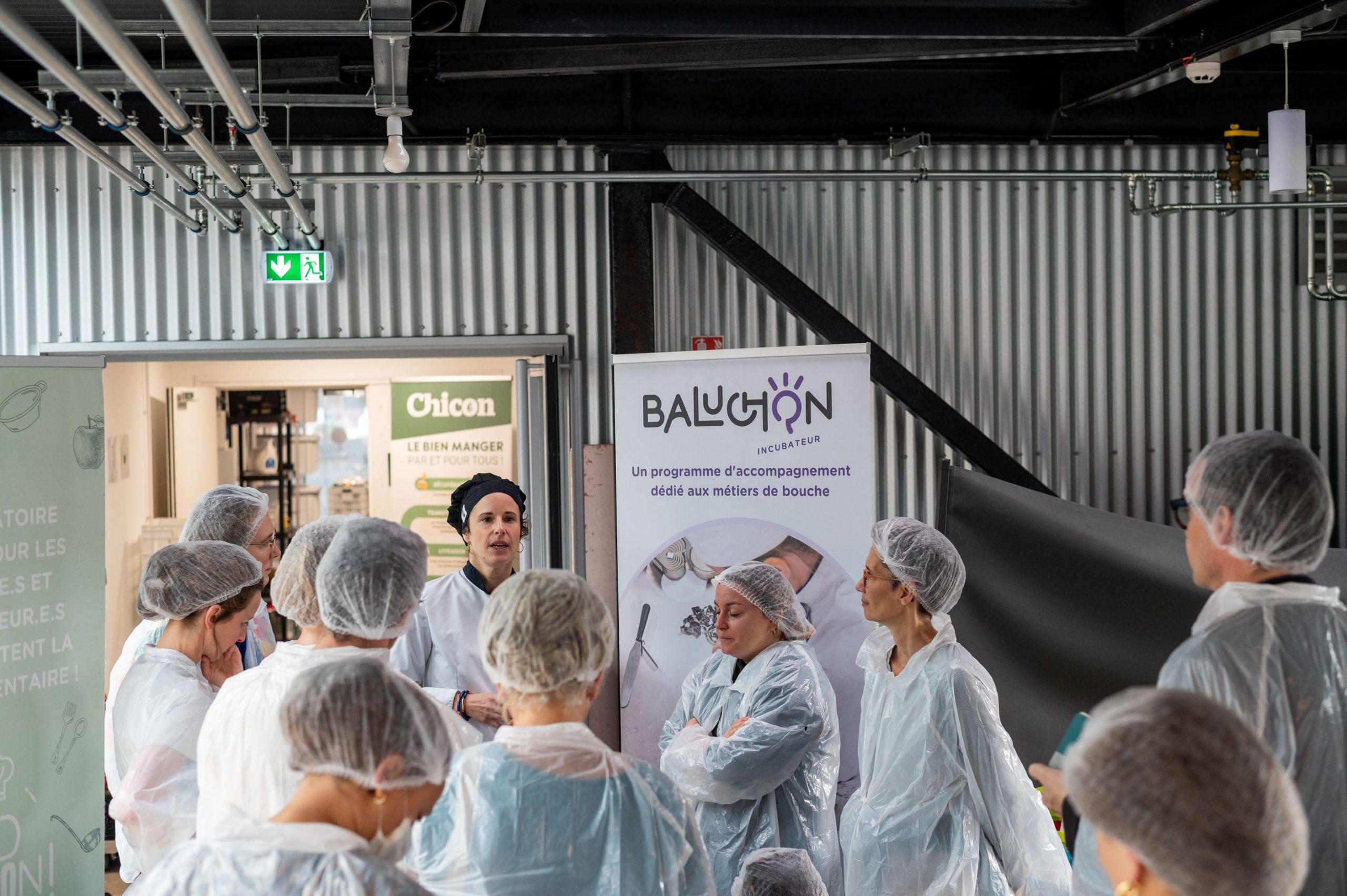
Bringing together a food hall, community kitchen, urban farm and professional kitchens, Chaud Bouillon connects food production, cooking, learning, community life and entrepreneurship under one roof.
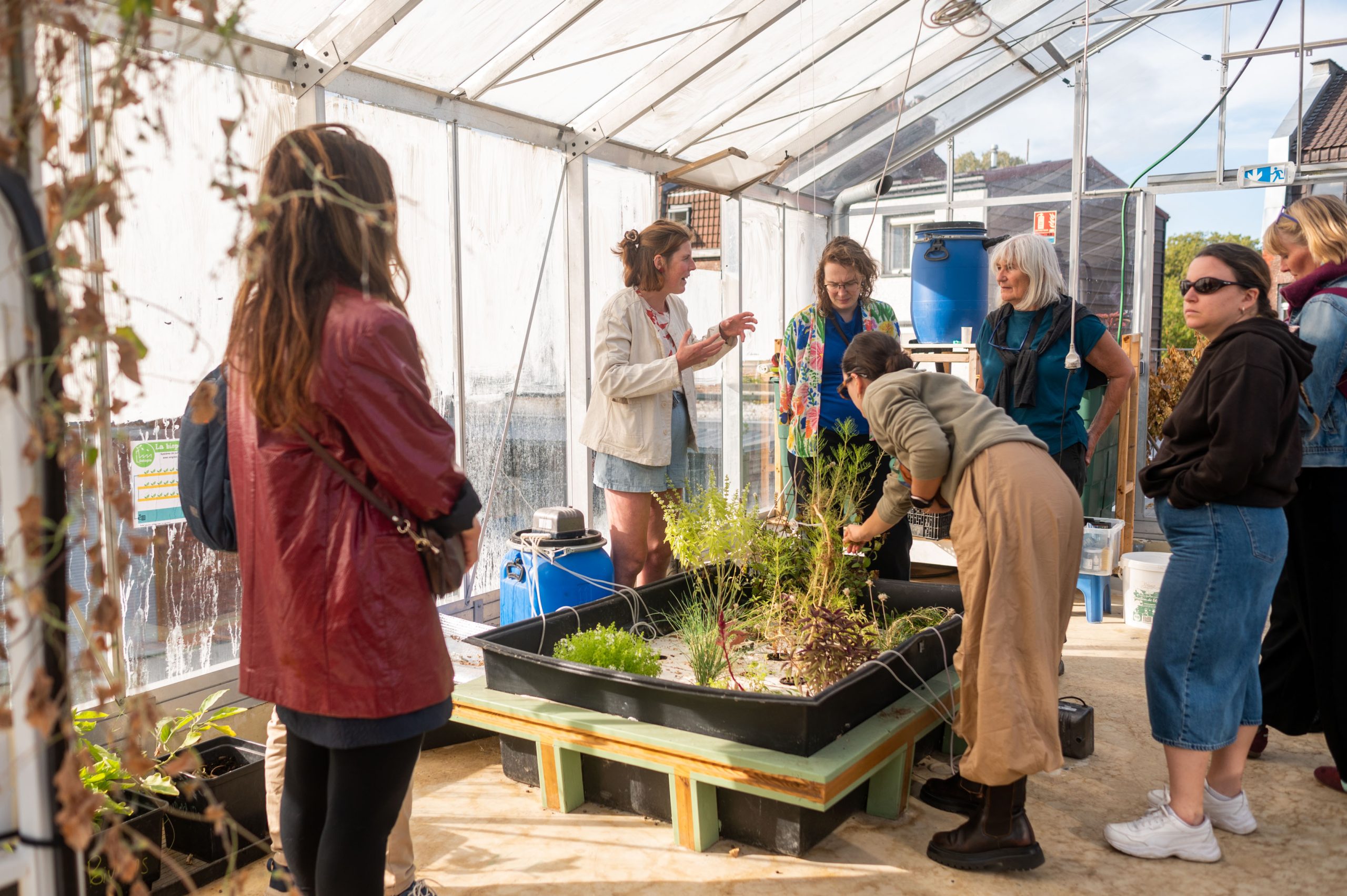
At Lilotopia Urban Farm, we explored urban farming and food education. Cuisine Commune showed how a community kitchen can become a space for hundreds of activities and thousands of participants, with solidarity, learning and social connection at its core. The professional kitchen offered yet another perspective, combining surplus food from supermarket chains with meal production, training and opportunities for young chefs to develop their businesses.
For Eutropian, this was a particularly clear example of why ROOTED looks beyond the kitchen itself. The infrastructure, organisations, skills, economic activities and communities around it are all part of the picture — creating an ecosystem in which food can become a starting point for social connection, learning and local economic activity.
ROOTED in place
Across Brussels and Lille, the kick-off gave us a first glimpse of the diversity of practices that the ROOTED network brings together. The visits also made clear that resilient local food systems depend on much more than physical infrastructure: they require relationships, governance, viable economic models and strong connections to place and community.
Over the coming years, ROOTED will bring these different experiences into conversation across its Living Labs and international network — exploring what can be learned, adapted and shared, and what it takes for pioneering local initiatives to become lasting parts of neighbourhood food infrastructure.
ROOTED in local networks.
ROOTED in place.
ROOTED in community.
The journey has only just begun.
ROOTED is funded by the European Union’s Horizon Europe programme.
The ROOTED consortium brings together 26 partners across ten countries:
| Cookie | Duration | Description |
|---|---|---|
| cookielawinfo-checkbox-analytics | 11 months | This cookie is set by GDPR Cookie Consent plugin. The cookie is used to store the user consent for the cookies in the category "Analytics". |
| cookielawinfo-checkbox-functional | 11 months | The cookie is set by GDPR cookie consent to record the user consent for the cookies in the category "Functional". |
| cookielawinfo-checkbox-necessary | 11 months | This cookie is set by GDPR Cookie Consent plugin. The cookies is used to store the user consent for the cookies in the category "Necessary". |
| cookielawinfo-checkbox-others | 11 months | This cookie is set by GDPR Cookie Consent plugin. The cookie is used to store the user consent for the cookies in the category "Other. |
| cookielawinfo-checkbox-performance | 11 months | This cookie is set by GDPR Cookie Consent plugin. The cookie is used to store the user consent for the cookies in the category "Performance". |
| viewed_cookie_policy | 11 months | The cookie is set by the GDPR Cookie Consent plugin and is used to store whether or not user has consented to the use of cookies. It does not store any personal data. |