
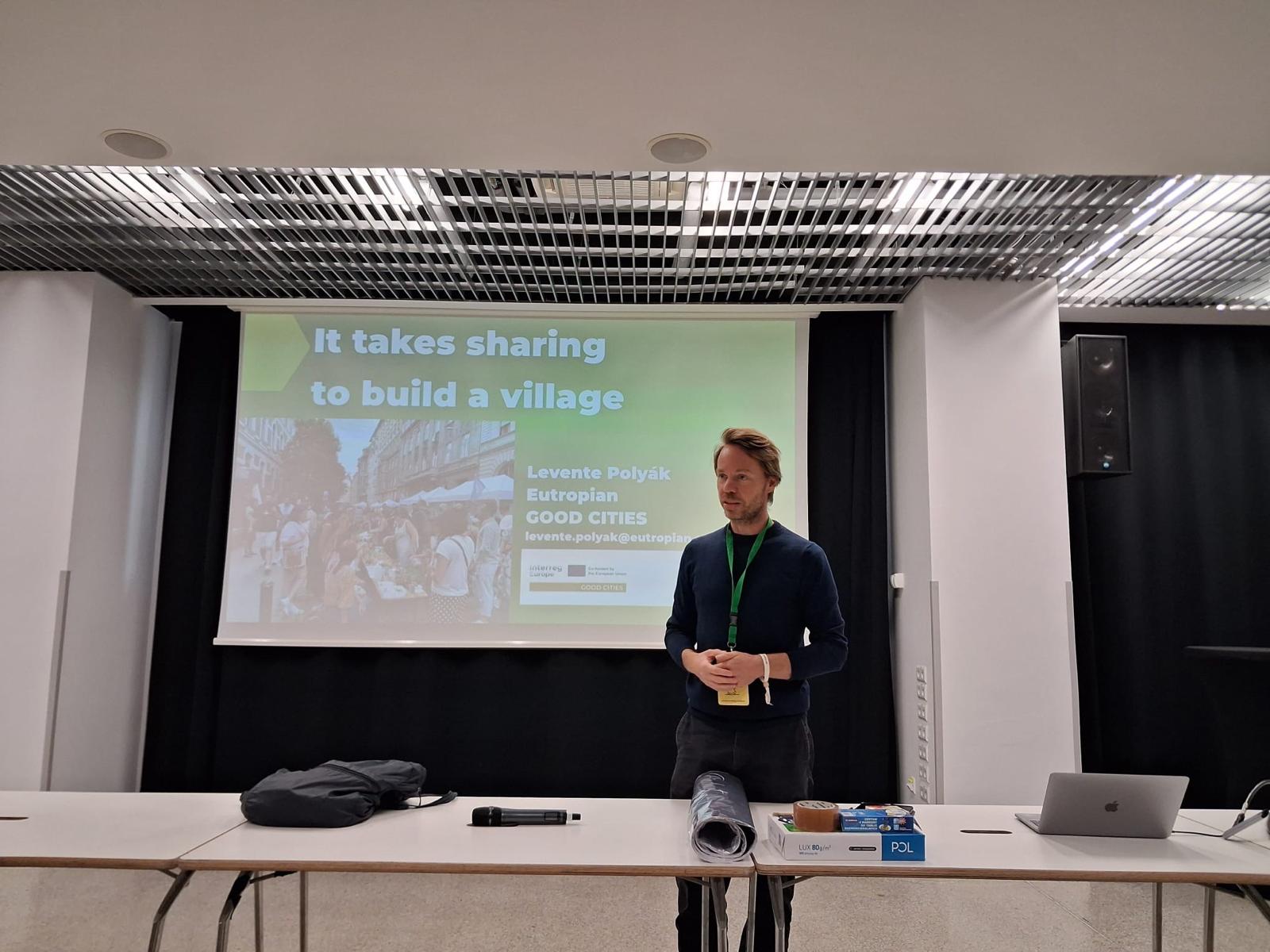
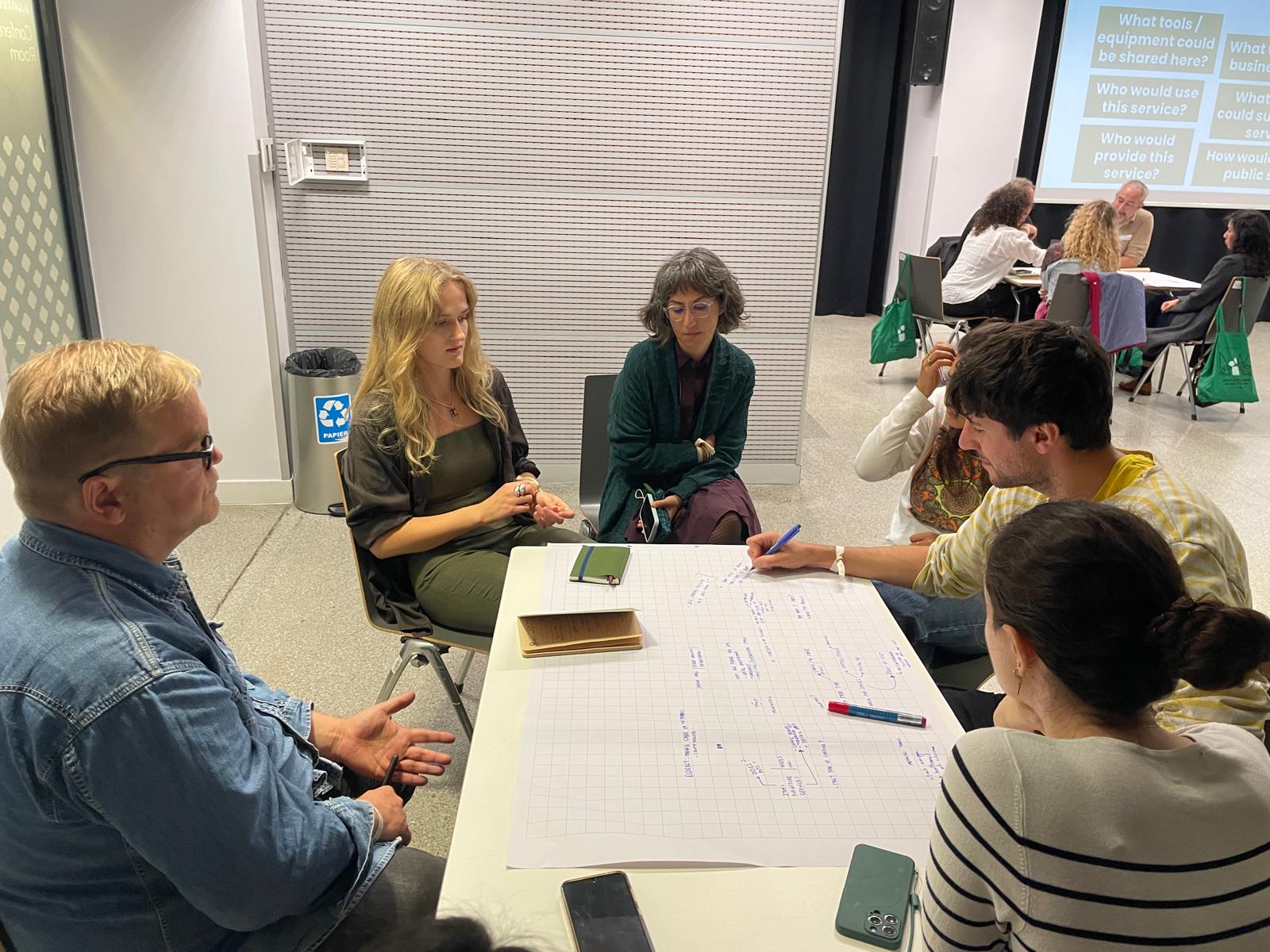
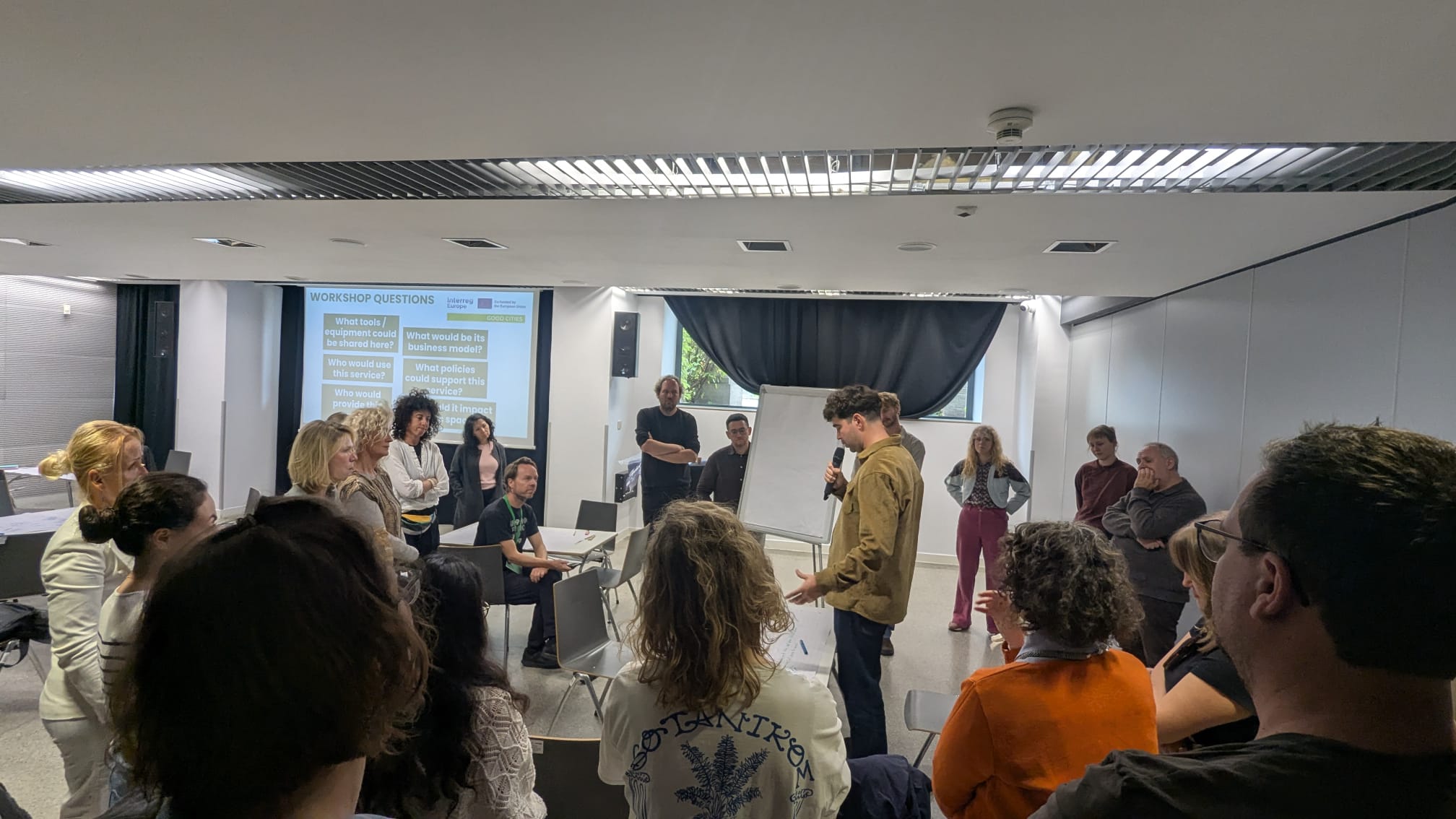

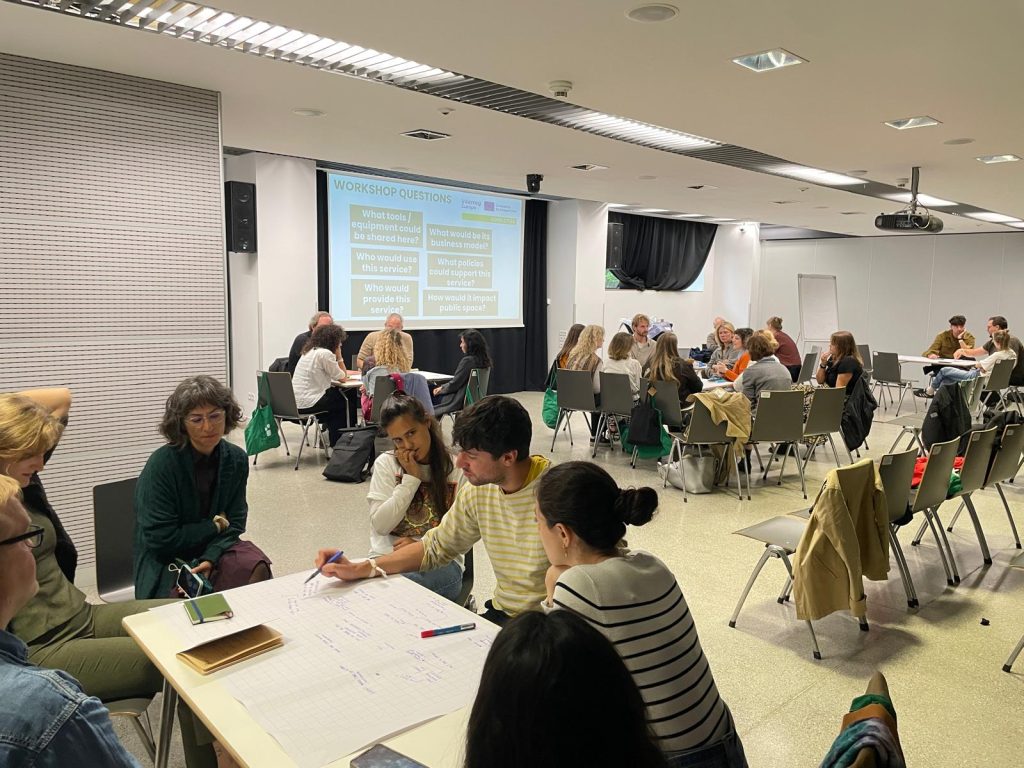
How can sharing help cities make better use of existing resources, strengthen public spaces and support the transition towards a circular economy? This was the focus of the GOOD CITIES workshop at Placemaking Week Europe in Wrocław led by Levente Polyák from Eutropian.
The workshop, ‘It takes sharing to build a village’, introduced the GOOD CITIES approach to the sharing economy of goods, explored examples from across Europe and invited participants to develop ideas for a first local lab.
The workshop opened with a quiz about sharing, using questions and examples to get participants thinking about the scale of underused goods, the barriers to using sharing services and the potential of making better use of things that already exist. It provided a starting point for considering why people share, what prevents them from doing so, and how cities can make shared access easier. These questions led into the GOOD CITIES approach of moving from ownership towards usership and developing an access economy.
The workshop then explored how sharing can connect with public space. Could easier access to toys, sports equipment or other goods change how people use public spaces?
The examples presented ranged from Fritidsbanken in Sweden, which provides free access to sports and outdoor equipment, to Biblioteca Jardim in Lisbon, a library branch located in a public park; ZUKO, a mobile street-furniture rental service; SZEVA in Újbuda, Budapest, where citizens share gardening equipment and knowledge; and Piffl’s sharing stations for sports and outdoor activities. These examples demonstrated different ways that sharing services can support activities in public space, from providing equipment for planned activities to making spontaneous use of public spaces easier.
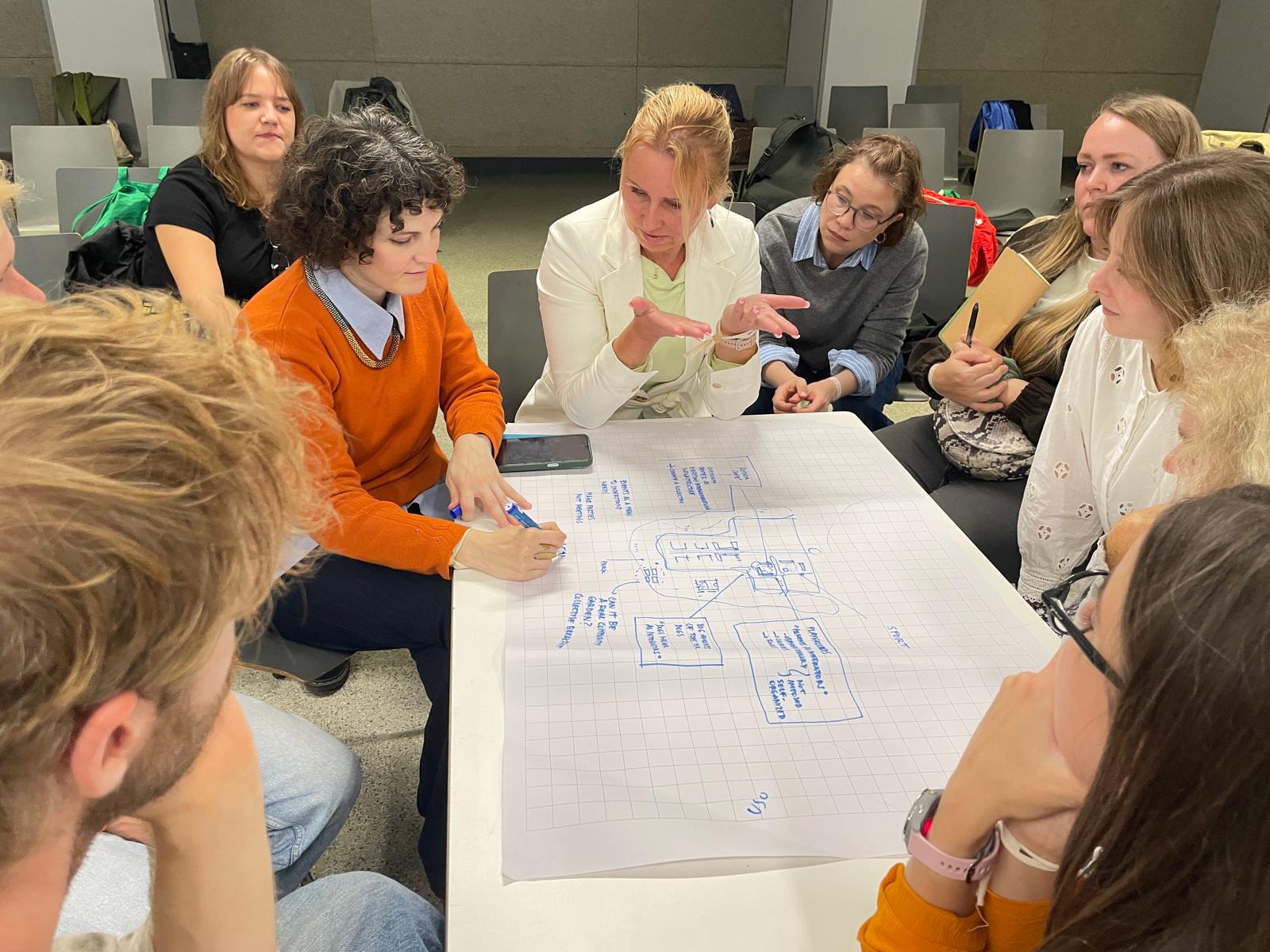
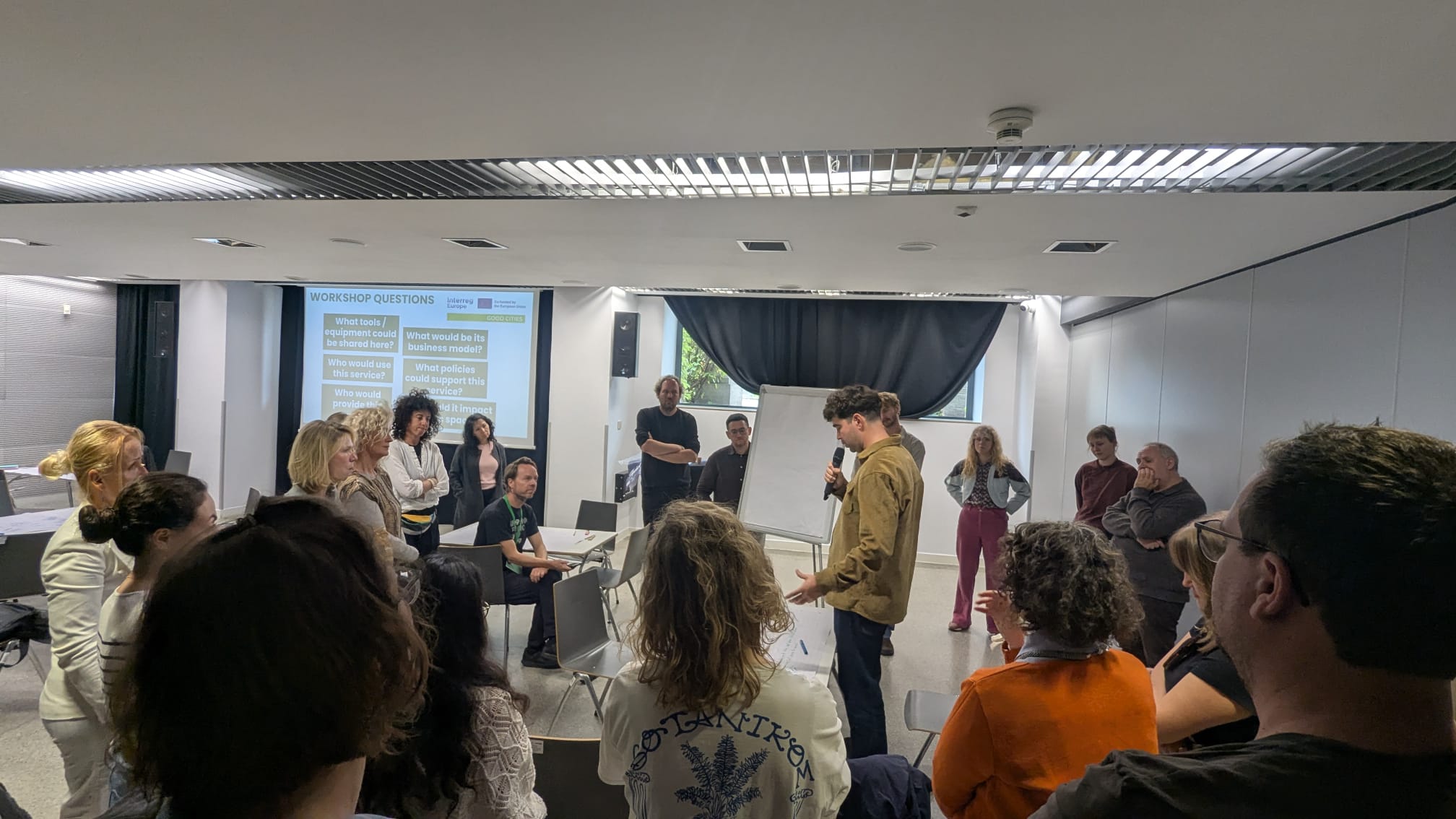
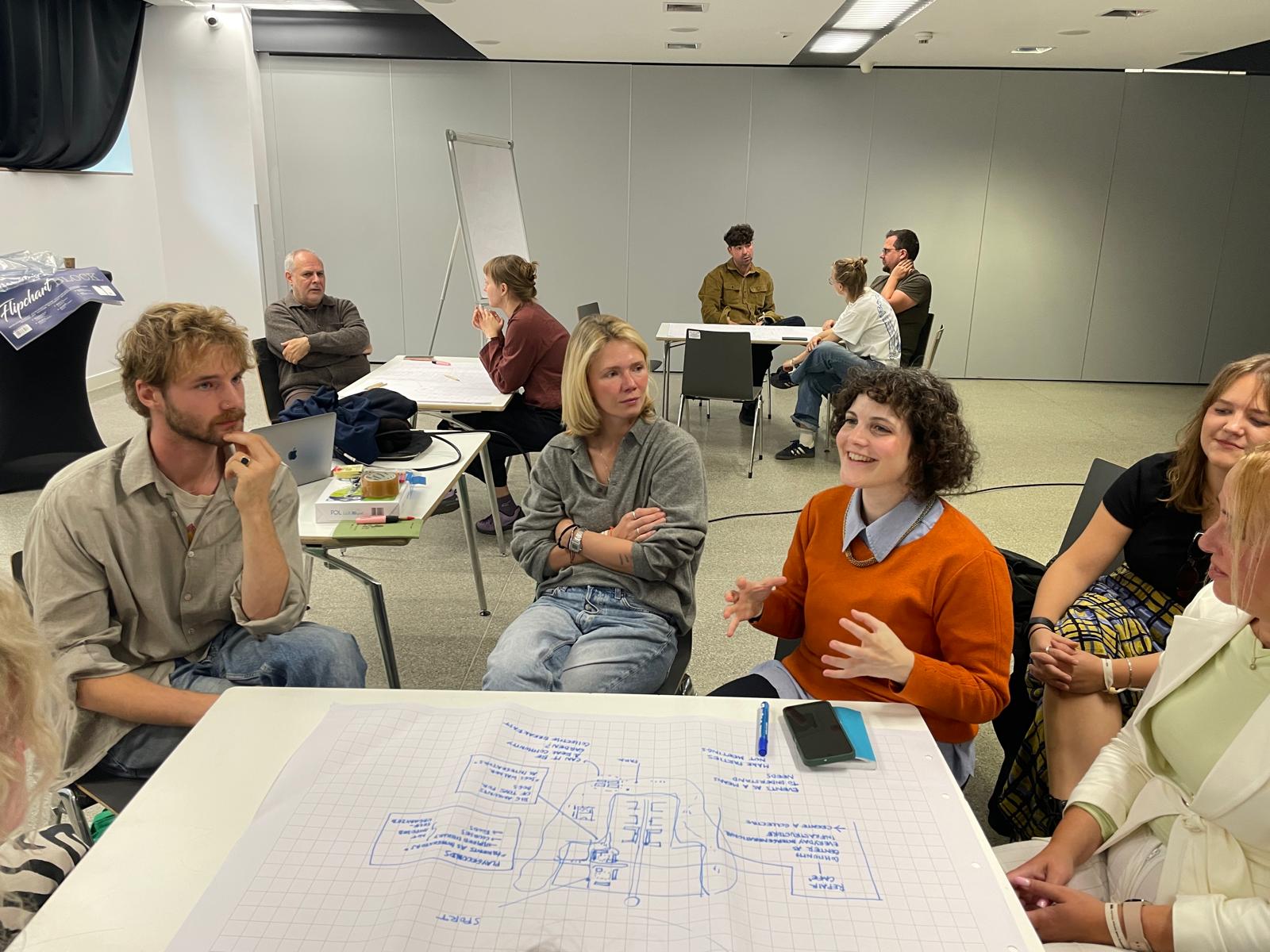
During the workshop, participants split into groups organized around specific urban environments and community focus areas, developing distinct ideas for sharing services and resources:
The first-lab exercise connected directly to the wider policy work of GOOD CITIES. A central question for the project is what role public authorities can play in developing the sharing economy of goods.
Eutropian is developing tools including a Social Business Model Canvas and Governance Toolkit to support cities and stakeholders in envisioning, planning and governing sharing-economy initiatives. The project is also working towards policy plans that bring together a city vision, positioning, good practices, KPIs, timelines, implementation budgets and procurement considerations that can foster circularity.
The workshop therefore connected the development of a sharing service in a particular place with the wider question of how cities can create the conditions for such services to develop and become part of longer-term urban policy.
| Cookie | Duration | Description |
|---|---|---|
| cookielawinfo-checkbox-analytics | 11 months | This cookie is set by GDPR Cookie Consent plugin. The cookie is used to store the user consent for the cookies in the category "Analytics". |
| cookielawinfo-checkbox-functional | 11 months | The cookie is set by GDPR cookie consent to record the user consent for the cookies in the category "Functional". |
| cookielawinfo-checkbox-necessary | 11 months | This cookie is set by GDPR Cookie Consent plugin. The cookies is used to store the user consent for the cookies in the category "Necessary". |
| cookielawinfo-checkbox-others | 11 months | This cookie is set by GDPR Cookie Consent plugin. The cookie is used to store the user consent for the cookies in the category "Other. |
| cookielawinfo-checkbox-performance | 11 months | This cookie is set by GDPR Cookie Consent plugin. The cookie is used to store the user consent for the cookies in the category "Performance". |
| viewed_cookie_policy | 11 months | The cookie is set by the GDPR Cookie Consent plugin and is used to store whether or not user has consented to the use of cookies. It does not store any personal data. |